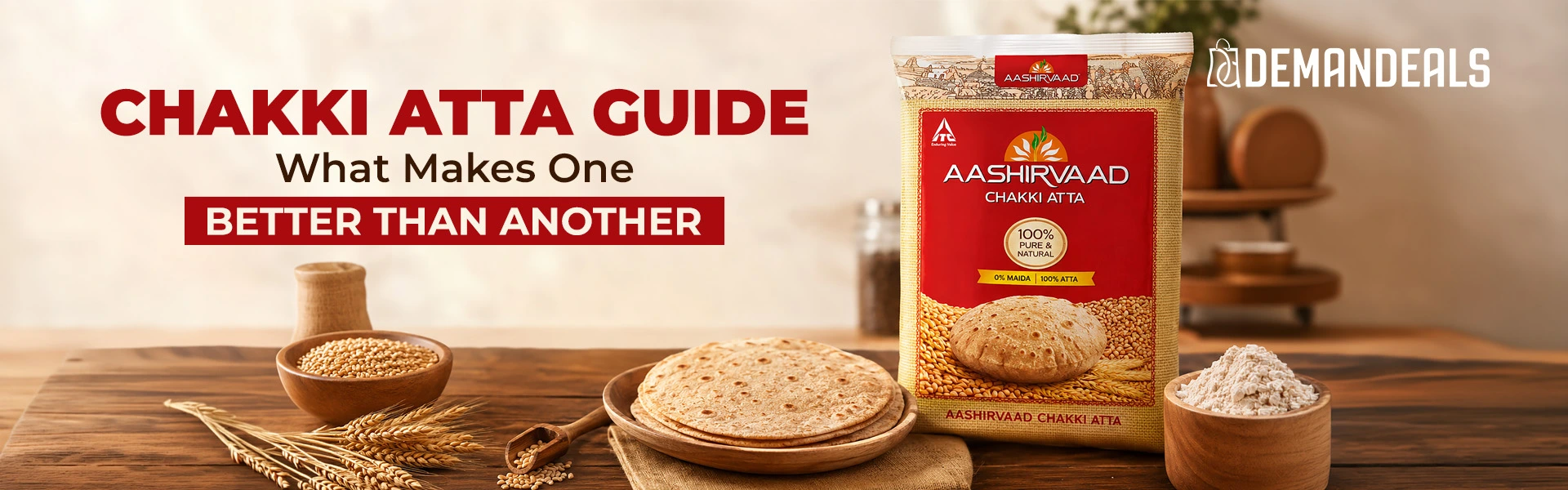
In India, roti or chapati is a staple at almost every meal. If you cook rotis regularly, you know the frustration of bad flour — you follow the same routine, and your rotis still turn out like dry cardboard five minutes after leaving the tawa.
Then you switch brands, follow the same steps, and suddenly you're getting soft, puffed-up phulkas that stay fresh into the evening. The difference comes down to what's actually inside the bag.
The market is flooded with options claiming farm-fresh quality. Strip away the packaging and the endorsements, though, and real quality comes down to three things: grain selection, milling heat, and bran retention. Understanding how authentic chakki atta is processed is what stops you from wasting money on flour that looks the same on the shelf but performs completely differently in the kitchen.
Roller Mill or Traditional Chakki? The Science of Milling
Not all flour mills work the same way, and the technology that crushes the wheat kernel changes how the dough behaves in your hands — and how it settles in your stomach.
Commercial roller mills process large volumes using steel cylinders that tear the wheat kernel apart, stripping away the oily germ and fibrous bran. Even when the bran gets mixed back in and labeled "whole wheat," the high-friction heat generated in the process has already cooked off a lot of the flour's natural nutrients and aroma.
Stone grinding works the opposite way. Heavy millstones crush the whole grain slowly at lower temperatures, which preserves fiber that high-speed processing tends to destroy. Because the process stays cool, natural oils and full-grain fiber survive intact rather than getting scorched out.
The practical differences:
- Stone mills crush the whole grain together, keeping natural germ oils and coarse bran in the mix
- Industrial steel rollers strip bran layers first, leaving a flatter, more processed starch base
- Low-heat stone milling preserves the wheat's natural flavor and sweetness in the final dough
- Stone-milled flour absorbs more water, which is a big part of why it keeps rotis soft for longer
Why Wheat Variety Matters
You can't get good flour from cheap, damaged, or shriveled grain — where your wheat comes from directly shapes how your rotis look and taste.
Sharbati vs. Regular Wheat
In central India, particularly Madhya Pradesh, farmers grow Sharbati wheat — the grain most associated with quality Indian flatbread. It's naturally rich in sugars and has a distinct golden-amber color. Ground without chemical bleaches or artificial additives, Sharbati wheat produces flour with a noticeable golden warmth, flavor, and mild natural sweetness.
Gluten, Elasticity, and Moisture Retention
Good wheat needs supple gluten proteins. When water is added to high-quality whole wheat atta, these proteins bond into an elastic structure that traps steam as the roti cooks on the flame — which is exactly what makes it puff up cleanly instead of cracking at the edges.
Signs of Quality Wheat
When assessing raw grain or reading a pack's fine print, look for:
- Heavy, dense kernels that don't feel hollow or unusually light
- A clear amber color rather than a dull, dusty yellow
- Clean, dust-free processing — grain that's been washed before grinding
Low moisture content in the raw grain, which supports longer shelf freshness
Which Atta Is Best? Three Things to Actually Check
Standing in the supermarket aisle trying to figure out which atta is best for daily cooking, cut through the marketing and check three specifics instead.
1. A Genuine Zero-Maida Guarantee
Some lower-cost mills mix in refined maida or starch offcuts to cut production costs. Refined flour strips out digestive fiber and causes faster blood sugar spikes after meals. Look for an explicit zero-maida claim on the pack — authentic atta should be 100% pure wheat, nothing else blended in.
2. Particle Size and Bran Distribution
Milling coarseness needs to land in the middle. Ground too fine, it behaves like maida and turns sticky when kneaded. Ground too coarse, sharp bran flakes tear through the dough as you roll it thin. Well-made atta strikes a balance — fine enough to roll smoothly, coarse enough that the bran distributes evenly through the dough.
3. Water Absorption for Lasting Softness
Dry dough is the enemy of soft rotis. Good flour holds onto water molecules during kneading instead of losing them during cooking. That retained moisture is exactly why well-made rotis stay soft in a lunchbox for hours after they're made.
A Look at Aashirvaad Shudh Chakki Atta
One packaged brand that's built a reputation for consistency across millions of Indian households is Aashirvaad Shudh Chakki Atta, made by ITC. Part of that consistency comes down to sourcing: grain is procured directly from ITC's rural procurement network across major wheat belts, then run through a 4-step cleaning process that removes foreign particles, dust, and damaged kernels before it ever reaches the grinding stone. The cleaned wheat then goes through automated stone chakkis designed to replicate traditional slow-grinding, without manual intervention.
On the nutrition side, each 100g typically provides upward of 10g of dietary fiber alongside plant protein, iron, and B vitamins, with a stated zero-maida composition — the kind of fiber content that supports steady digestion and more consistent energy through a busy day.
Whichever brand you land on, the same three checks apply: purity, particle balance, and water retention. A brand name is only useful as a shortcut if the fundamentals actually hold up — which is worth verifying for yourself rather than taking on faith.
Smart Shopping With Demandeals
Buying premium kitchen staples month after month adds up fast on a household budget. But cutting corners on flour quality to save a few rupees is a bad trade-off for your family's health — the smarter move is paying for quality and finding the deal, not settling for less.
That's where Demandeals comes in for grocery shopping. A few reasons people stick with it:
- No fake coupons just to drive clicks
- Cashback that's real and shows up on schedule
- Offers updated constantly, not left stale
- Honest deals that actually work at checkout
Check the Aashirvaad chakki atta coupon code before your next grocery run, or browse the full Food & Grocery category for more household staples with active cashback.
Tips for Storing and Kneading Your Atta
Buying good flour gets you halfway there — the rest comes down to handling it right at home.
- Storage: Transfer new atta out of the plastic pouch into a clean, dry, airtight steel container. Keep it in a cool pantry, away from steam or damp counters.
- Kneading: Use warm water and knead for 5 to 7 minutes to build a proper dough structure.
- Resting: Cover the dough ball with a moist napkin and let it rest for 20 minutes before rolling. This gives the gluten time to fully hydrate, which makes rolling easier and the finished rotis noticeably softer.
Conclusion
Once you know what to look for, picking the right flour stops being complicated. Good stone-milled flour keeps the full wheat bran intact, holds together properly once water is added, and produces light, digestion-friendly chapatis that stay soft through the day. Stick with a brand that can back up its purity and processing claims, and check Demandeals before you buy so a daily household essential doesn't cost more than it needs to.