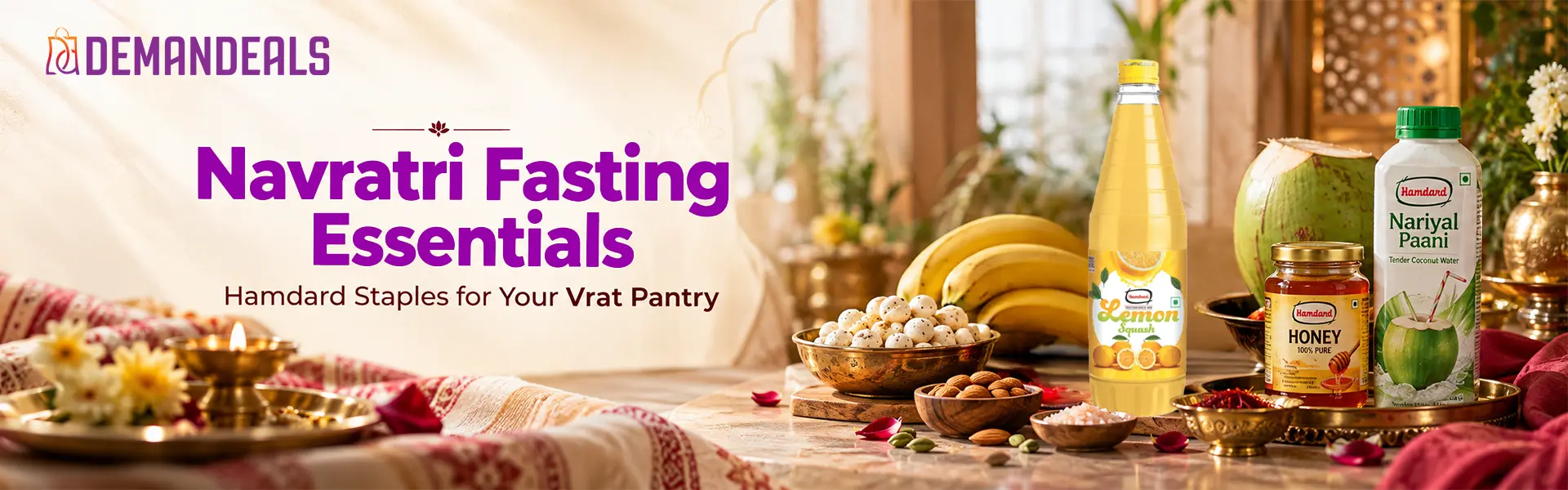
Navratri has a weird way of sneaking up on you. One Tuesday you are making regular dal-chawal, and by Wednesday morning, garlic is contraband and your spice rack is completely cleared out. (If you have ever had to scrub down a whole masala dabba before sunrise, you know the panic.)
Then day two rolls in.
Around 3 PM, the fast hits. Your head feels like cotton wool, your stomach makes noises that alarm the family dog, and the thought of another dry boiled potato makes you want to lie on the floor. If you are already a few days in and nodding along, good news: there are still several fasting days left, and it is not too late to fix your pantry. Stocking sensible Navratri fasting essentials changes the whole game. It is the difference between feeling energized and feeling like a grumpy zombie running on fumes. Keep it simple: drink real fluids, eat real food, and keep a few trusted kitchen staples within reach.
Rethinking Your Navratri Fasting Essentials
Let us be honest with ourselves for a second. We start fasting with lofty visions of a clean spiritual reset.
Cut to 8 PM. You have somehow polished off half a plate of deep-fried sabudana vadas and two packets of salty banana chips. That is not fasting. That is just an excuse to eat hot oil.
By day three, the heartburn moves in unannounced. You get sluggish and moody. You can barely keep your eyes open during the evening aarti. Fixing this is not about starving; it is about swapping convenience-store snacks for simpler ingredients that are easier on your stomach.
Why Heritage Kitchen Staples Work Best
Our grandmothers never bothered with trendy superfood powders or imported miracle teas. They relied on simple kitchen staples that were easy to find and easy to digest.
When you cut out regular grains, many people find their digestion gets more sensitive. Heavy, greasy snacks on an empty stomach tend to make that worse. That is one reason traditional brands like Hamdard, which has been making herbal and kitchen products in India for over a century, keep showing up in Indian kitchens year after year.
Here is what usually trips people up:
- Mistaking thirst for hunger. Drink a glass of water before reaching for that bowl of salted chips.
- Relying only on potatoes. Starchy meals every few hours can leave you tired by mid-afternoon. Mix in fruit, dahi, makhana and nuts.
- Forgetting that buckwheat and singhara flours are heavy. If you skimp on fibre and fluids, your stomach may complain loudly by day four.
- Buying marked-up "vrat special" snack boxes from corner shops. Check the date and the oil they were fried in before you pay a premium.
Treating your pantry with some common sense is not about being strict. When you have three or four simple staples waiting on your shelf, nine days of fasting feels a lot more manageable.
Hamdard Staples for Your Vrat Food List
Let's be real: a proper vrat food list should not look like you are prepping for a doomsday bunker. You do not need twenty artisanal jars you will look at with mild regret once Dussehra arrives on October 20. You just need three or four reliable workhorses for the hours when dinner is still far away and your willpower is running on 2% battery.
A quick note before you stock up: fasting rules differ from family to family and region to region. Some households are strict about packaged foods, syrups or added ingredients. Always read the label, and when in doubt, follow your family's tradition. The items below are suggestions, not a guarantee that every product suits every vrat.
Pure Sweet Almond Oil: Roghan Badam Shirin
Fast for a few days in crisp autumn air and your skin can start feeling like parchment paper. Dry, scratchy skin is common when the weather turns, and it does not help if you have spent the evening on your feet running errands or dancing garba until midnight.
Roghan Badam Shirin is Hamdard's sweet almond oil. Product listings describe it for both internal and external use, so it works as a small pantry-and-skincare double act. Because it is a concentrated oil, follow the dosage on the pack rather than eyeballing it.
A few simple ways to use it:
- In warm milk at night. Retailer listings for Roghan Badam Shirin suggest about 5–10 ml (roughly one to two teaspoons) in a glass of milk at bedtime. Start at the low end.
- A light drizzle on warm boiled sweet potato with rock salt. A little healthy fat makes the dish more filling than dry tubers on their own.
- On dry lips or skin. A tiny amount on chapped lips or dry patches works well as a moisturiser. Do a patch test first if you have sensitive skin.
Who should be careful: skip it if you are allergic to almonds or other nuts, and check with your doctor first if you are pregnant or breastfeeding. Do not use it in your nose or ears unless your doctor has advised it.
The Classic Hydrator: Rooh Afza
Yes, that iconic glass bottle. The one that has been living in Indian refrigerators since before most of us were born. People usually file it under "scorching summer afternoons," but pulling it out for Navratri evenings is a nostalgic treat.
Be clear-eyed about what it is, though: Rooh Afza is a sweet syrup, so think of it as a treat and not a health drink. A small splash goes a long way.
When dusk falls and you finally sit down after prayers, plain water can feel underwhelming. A few ways to dress it up:
- Stir a spoonful into chilled milk for a quick, creamy pick-me-up.
- Drizzle a little over warm makhana kheer for a floral note. Use it in place of some of the sugar, not on top of it.
- Mix it into ice water with a handful of soaked sabja seeds when you walk through the door.
Because it is sugary, keep portions modest, and people managing diabetes should check with their doctor before making it a daily habit.
Pure Honey for a Natural Sweetener
Refined white sugar is an absolute trap during a fast. You eat a sugary treat, feel like an energetic superhero for twenty minutes, and then crash hard enough to consider napping on the kitchen floor.
Honey is still a form of sugar, so it is not a magic fix. What it does offer is a natural, flavorful sweetener that you can use in smaller amounts than refined sugar. Whisk a spoonful into a bowl of chopped apples and pomegranates, stir it into mild ginger water, or mix it with warm lemon water at 6 AM before the house wakes up and the daily chaos begins. (Honey should never be given to babies under one year old.)
Gentle Digestion and Vrat Essentials
Let's talk about the slightly awkward elephant in the room: samak rice, kuttu (buckwheat), and singhara flours are absurdly dense. Nine straight days without your usual rotis and lentils can leave your digestion feeling like it has swallowed a brick.
Keeping Your Gut Happy with Isabgol
This is where a humble box of Hamdard Isabgol (psyllium husk) can help. It is a source of soluble fiber, and it has been a trusted home remedy for sluggish digestion for generations. Some families treat isabgol as fasting-friendly, and others do not, so check with your household's rules first.
A few easy ways to use it:
- In a full glass of water. Follow the dose on the pack, stir it in, and drink it straight away before it thickens. Always take it with plenty of fluids, because isabgol swells as it absorbs liquid and can cause choking or blockage if taken dry or with too little water. Avoid taking it right before lying down.
- In kuttu dough. Some cooks add a pinch to crumbly buckwheat dough to help bind it so puris hold together in the pan.
- In dahi. Many people stir a little into fresh dahi at lunchtime. Keep a glass of water nearby.
Who should be careful: if you have trouble swallowing, an intestinal blockage, diabetes, heart or kidney conditions, or take regular medicines, speak to your doctor or pharmacist first. Take isabgol at least 30 to 60 minutes apart from other medicines, and ask your pharmacist if you take anything that needs a longer gap.
Rose Water (Arq Gulab)
Most folks treat rose water purely like a facial mist. Fair enough. But food-grade Arq Gulab is an old-school culinary favorite. Check that the label says it is meant for consumption, as some rose waters are sold for skin only.
Just three or four drops in a bowl of warm sabudana kheer or pumpkin halwa completely changes the character of the dish. Suddenly, humble fasting food tastes like something from a royal feast. Rose water is also traditionally used in Indian homes as a cooling note alongside rich or fried foods, though that is a matter of tradition more than science.
Having these Navratri fasting essentials ready in your cupboard takes the panic out of fasting. You will not find yourself staring blankly into an open fridge at 7 PM, desperately trying to invent dinner out of rock salt and sheer optimism.
Order Hamdard Products Online and Save
Have you ever tried visiting a local supermarket in the middle of festival week? Carts bumping your ankles, billing lines that stretch out the door, and the good fasting flour are sometimes sold out. Ordering your pantry staples from home is often the saner route.
Stock Up from Home and Maximize Savings
Getting Hamdard products online takes about five minutes in your pajamas. But do not just hit checkout at full retail price, because festive spending adds up fast. Between flowers, puja thalis, fresh fruit, new clothes, and fasting flowers, your bank account takes a beating before the week even gets going.
This is where Demandeals can help. It is one of the popular cashback and coupon sites in India, and it works by paying you cashback when you shop through its links. (New to this? See how Demandeals cashback works or our explainer on what cashback is and how to redeem it.)
Hamdard Coupon Code and Rooh Afza Offers: What to Expect
Here is the honest picture. At the time of writing, the Hamdard page on Demandeals is marked "launching soon," and there is no verified Hamdard coupon code to share yet. So we will not hand you a code that might not work.
What you can do in the meantime:
- Check the Hamdard page on Demandeals for updates on cashback and offers as they go live.
- Look at the Hamdard store's own festive pricing and bundle deals when you order. Offers on items like Rooh Afza vary by store and change often, so compare before you buy.
- Never pay for a coupon code from a random website. If a code does not work at checkout, skip it and move on.
A tiny bit of planning means you get your kitchen essentials delivered to your door, skip the humid store stampede, and keep your hard-earned cash where it belongs.
Disclosure: Demandeals may earn a commission when you shop through links on this site. This does not affect the price you pay.
A Practical Daily Fasting Routine
Stocking your pantry is half the battle; knowing when to actually eat is what keeps you functional. Without a rough rhythm, you will find yourself inhaling three sugary sweets at 4 PM out of sheer desperation.
Making It Through the Day
- First light: A tall mug of lukewarm water with a little honey and fresh lemon is a gentle way to wake up your gut before the household madness kicks off.
- Midday refuel: Keep lunch grounded. Think boiled potatoes or crunchy roasted makhana tossed in rock salt, with cold dahi on the side.
- Sundown reset: After evening prayers, a glass of chilled milk with a small splash of Rooh Afza is a comforting treat. Keep the portion small.
- Tucking in: Warm milk with a measured spoon of Roghan Badam Shirin works for some people after late garba rounds. If dinner felt heavy, a properly mixed glass of isabgol and water is an option, but avoid taking it right before lying down.
Navratri should leave you feeling grounded, not completely flatlined. Swapping greasy street snacks for honest kitchen staples can make fasting feel restorative rather than exhausting. Drink your fluids, eat simple food, and plan ahead. Here is to a calm, nourishing, and happy nine days.
Planning your garba looks as well? Browse our Navratri outfit ideas for 2026 for a colour for every night.
This article is general information and not medical advice. If you have a health condition, are pregnant or breastfeeding, or take regular medication, check with your doctor before changing your diet or using any of these products during a fast.